
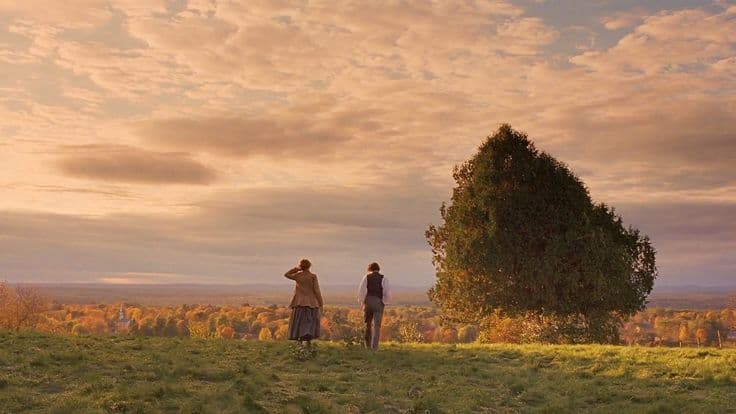
The internet seems to be ever-expanding, but even with such an abundance of online material to draw from, I find myself going back to things outside of the realm of digital design as a source of fuel. Handwritten postcards, book covers, old magazines, nature, well-documented LEGO sets, and thoughtfully planned spaces are a few, but one medium that endlessly inspires me is film.
Movies are a form of communication like no other — they take light and sound and turn them into a language that is unique to every film. The conversation between the screen and the mind is not to be taken lightly. One gives endlessly and the other takes readily and greedily, absorbing, consuming, and turning over the pixels of light, fitting them into the larger knowledge of our own lives. Everyone leaves the movie theater a slightly different person than when they entered, armed with some greater truth about the world or about themselves. These truths take root in small ways at first, perhaps in humming the melody of a soundtrack or thinking of a particularly memorable line, but over time, filaments of the films we consume form patterns that we find ourselves going back to, over and over.
The pattern that I find the most inspiring across films is the rendering of the human condition: to love, to have faith, to endure hardship. Movies are an art form which mirror the things we all experience, but don't always have words to describe — the gravity of grief, an angle of hope, the hollowness of solitude. They are an onscreen representation of what good craft not only looks like, but feels like. We feel a connection to this Other portrayal of what seems like our own lives, just lived differently. Even in foreign worlds like Dune, we recognize ourselves. We first feel the reverberation of the music and the rich textures on the screen and then secondarily, we process how love and hatred and ambition and spirituality bolster and corrupt the human spirit. We yearn to understand what these things mean to us, if anything at all.
The best films render the human condition with visual grace and subtlety. There is thick desperation in the passing of time in Interstellar. There is obsession in the maniacal precision of the Black Swan. There is youthfulness in the frenetic energy of Keating in Dead Poet's Society. All of this is done through basic sensory components: colors, contrast, pitch, intensity, speed. It doesn't take an artist to admire these details, but anyone who has created anything with intention knows that every detail must communicate something — no scene in a film is left there negligently. Every visual intends to communicate just a word in the larger paragraph of the film. Every spontaneous moment or painstakingly staged scene results in a combination of things that create polished resolution.
One of my favorites is the scene in Little Women (2019) when Laurie proposes to Jo. The craft of this scene reveals itself in every frame. The fade of Jo's smile as she realizes Laurie's insinuated marriage proposal, and the ensuing awkwardness of Jo's rejection is captured so rawly, as the two characters stumble across the shrubby hill. Laurie comes to painful terms with Jo's words, his expressions shifting from desperate to hopeful to dejected within a matter of seconds. The wind blows messily through Jo's hair, and the light on the horizon starts to die to the decrescendo of the music as Laurie leaves Jo alone on the hill to ponder her words, both of their decisions sealed within a few minutes of conversation. It's a short scene, but one that leaves you with a twinge of sadness, regret, yearning, and also some hesitation of understanding.
In all that I create, I find myself going back to moments like these in movies — they're a reminder to relish the details, to choose my mediums intentionally, and to craft something that feels uniquely human.