
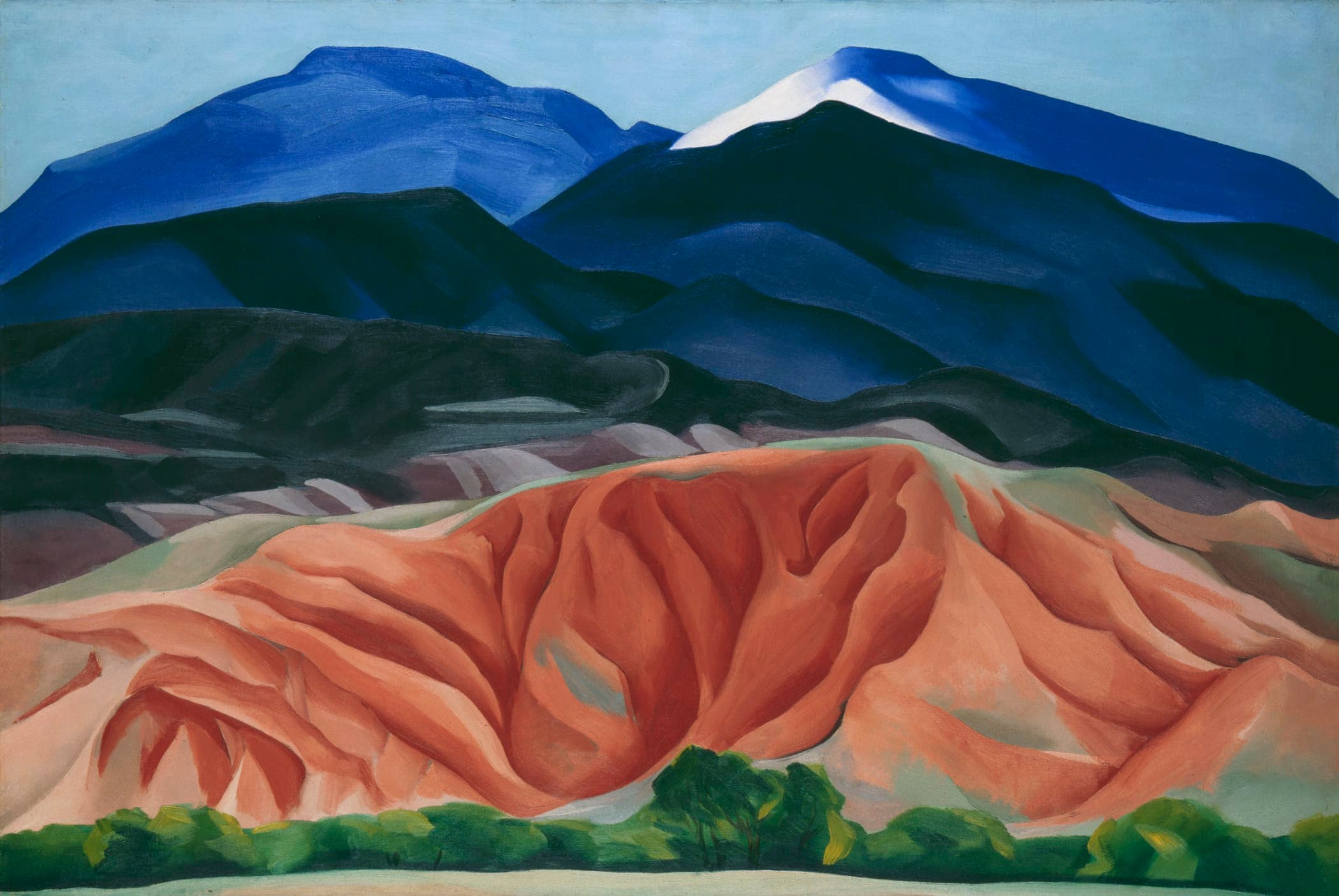
Out west, the vastness of the land is shocking. It feels like stepping into a Manifest Destiny painting: miles and miles of flat farmland dotted with black cows, a majesty of mountain ranges, sometimes reaching so far up that they meet the clouds, rustic wood cabins and farmhouses, trains carrying cargo on tracks that stretch out of reach.
The sky is so open, and often cloudless, that it feels like there’s a smooth blue ocean above. Hung opposite the mountains with the starkness of an Ansel Adams silver gelatin print, the morning sun burns in a white, liminal disk. On this side of the Rockies, an eastern Sun rises with the rooster’s crow, and a western Sun is a harbinger that nightfall will soon slip over the earth in a velvety blue cover. But just before that dark blanket falls, a shower of pinks and purples and yellows burst forth from behind the mountains in a glorious display, enough to make anyone a believer in Manifest Destiny. Squint hard enough and maybe you could even imagine a cowboy ripping and tearing across the open plain with the ferocity of a coyote on a hunt.
But for all the tales of grandeur of this destined Front Range, the beauty out here carries a metallic taste. It catches you in a trance—a mirage shimmering before you—before reluctantly returning you to your senses. The desert would sooner cradle you to your last breath than grant you a drink of water. The dirt, red with iron, blows in merciless clouds across the land, bringing dry shrub and plastic wrappers and fast-food napkins in tow. A single prickly thistle (Salsola, Latin for “salt plant”) detached from its root, might tumble around for a few days and many miles, slowly deteriorating before reaching the next town.
The vastness of the land is incomprehensible. In the warring days, opposing campaigns ignited and flickered across the land. A circling hawk might have taken them for fireflies on a lawn. When one could see their enemy coming from ten miles away, there was no such thing as a continuous front, no grand shoulder-to-shoulder charge like Napoleon’s Waterloo. Instead, they skirmished and scorched and flashed quickly into the open country. Was the rising column of smoke in the horizon a trick of the wind or the sudden storming of a cavalry? They fought in the name of expansion; a land already red from iron, bled redder as Texan rebels defended missions (”Remember the Alamo!”) and torched settlements in their passionate Revolution, as U.S. columns seized dusty border towns in the Mexican-American War, as American cavalry drove tribes from the plains in the long, punitive Indian Wars, and as the distant thunder of the Civil War’s western theaters brought ruin upon railroads and frontier farms.
Standing here, it is hard to imagine the chaos that once ravaged the land. The silence presses into you, at once suffocating and liberating. It is the same austere quiet that seeps from Georgia O’Keefe’s red hills, Agnes Martin’s pale grids, and Larry Bell’s sheets of light, a quiet which is only achieved out of reverence for empty space. Out west, the land gives as much as it takes; the restless mind falls silent, settling into a peaceful solitude.